
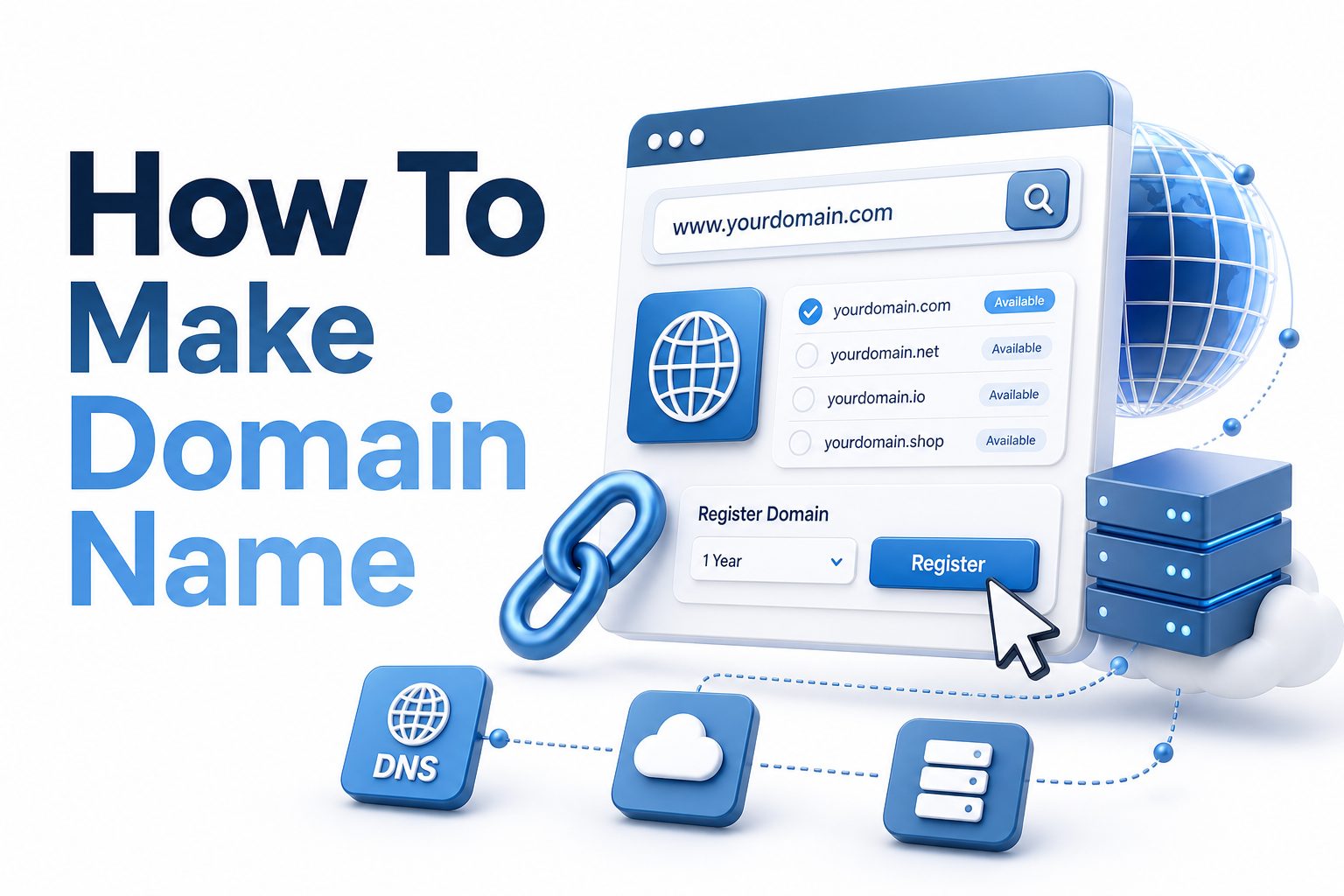
A domain name is the web address people type, share, remember, and connect with your brand. It should feel simple, relevant, and trustworthy while giving visitors a clear signal about your website’s purpose.
The best domain names are easy to say, easy to spell, and easy to recognize across search results, social media, business cards, and emails. A strong name reduces confusion and helps people return without searching again.
Before choosing a name, define the website’s purpose, audience, topic, and long-term direction. A domain built around one narrow idea may feel limiting later if your content, services, or product range expands.
Why Domain Names Matter for Online Growth
Your domain name shapes the first impression before visitors read a single sentence. A clear name can make your site feel credible, organized, and focused, which matters for both readers and potential customers.
Search engines do not rank a site only because of its domain name, but a relevant domain can support click-through rates, branding, and topical clarity. It works best when paired with useful content and strong site structure.
A weak domain can create spelling problems, trust issues, or brand confusion. If people hesitate before clicking or cannot remember your website later, the name may be working against your content strategy.
Key Qualities of a Strong Domain Name
- Short enough to remember after one visit
- Simple enough to type without mistakes
- Relevant to the brand, topic, or offer
- Flexible enough for future growth
- Clean without confusing numbers or symbols
- Easy to pronounce in conversation
- Available across important social platforms
Start With Your Brand Purpose
Start by writing one clear sentence about what your website does. This helps you avoid random ideas and keeps every name option tied to the real purpose behind your blog, business, service, or product.
Think about the feeling your brand should create. A finance site may need trust and clarity, while a food blog may need warmth and personality. The domain should match the tone readers expect from the content.
Write down your main topics, audience type, service area, and brand values. These notes become useful filters when comparing names, especially when several options sound good but only one fits the long-term direction.
Choose Words People Can Remember
Memorable domain names use familiar words, clean sounds, and simple structure. If someone hears the name once during a conversation, they should have a fair chance of typing it correctly later without asking again.
Avoid awkward spellings, doubled letters, and words with multiple common versions. Creative spelling may look interesting, but it often creates practical problems when visitors try to find your site from memory.
Read every name idea out loud. If it feels clumsy, too long, or hard to explain, it may not serve your audience well. A good name should sound natural in introductions, ads, podcasts, and customer conversations.
Simple Word Formula Ideas
Brand word plus topic word:
BrightFinance, GardenNest, FitRoute
Audience word plus benefit word:
FounderDesk, ParentGuide, CreatorStack
Location plus service word:
AustinLegal, DenverCleaners, MiamiHomes
Original brand word:
Nexora, Vellumly, Bravanta
Keyword plus brand word:
DomainPilot, HostingLane, TravelScope
Use Keywords With Care
Using a keyword can help people quickly identify your topic, especially for service businesses, niche blogs, and local websites. A relevant word may also improve how your listing appears to users scanning search results.
A domain should not feel stuffed with search terms. Long keyword chains look less trustworthy and can sound outdated. Readers prefer names that feel like real brands, not phrases created only for search engines.
If you use the primary topic in the domain, balance it with a brandable word. For example, a name related to domains can include “domain” without becoming long, repetitive, or hard to remember.
Keep It Short and Clear
Short domains are easier to type, easier to share, and less likely to be misspelled. While very short names can be hard to find, you can still aim for a clean name with two simple words.
Clarity matters more than chasing the shortest possible option. A five-letter name that nobody can pronounce may be weaker than a two-word name that clearly communicates your brand’s topic and value.
Remove any word that does not add meaning. Words like “the,” “best,” “online,” or “official” can sometimes work, but they often make names longer without making them stronger or more memorable.
Avoid Common Naming Mistakes
Do not choose a name only because the exact domain is available. Availability is useful, but the name still needs to support your brand, audience, content plan, and professional image over time.
Avoid names that are too close to existing brands. Similar names can cause legal issues, traffic confusion, and trust problems. A quick trademark and search review can prevent expensive changes later.
Stay away from hyphens, confusing numbers, and hard-to-explain abbreviations. These elements may save a few dollars during registration, but they can create friction every time someone hears, types, or shares your domain.
Mistakes to Check Before Registration
- The name sounds like another company
- The spelling is hard to guess
- The domain is too long for daily use
- The meaning changes in another language
- The social handles are unavailable
- The name limits future content growth
- The extension feels unrelated to the site
Pick the Right Domain Extension
The domain extension is the part after the dot, such as .com, .net, .org, or a country-based option. The right extension depends on your audience, brand type, and website purpose.
For most businesses and blogs, .com remains the most familiar choice. People often assume a brand uses .com, so owning it can reduce confusion and make your website feel more established.
Other extensions can work when they fit the project. Nonprofits often use .org, tech products may use .io, and local businesses may use country extensions. Choose one that feels natural to your audience.
Check Domain Availability Properly
Once you have a shortlist, search each name through a reliable domain registrar. A name may appear available in one place but be listed as premium, reserved, or already registered elsewhere.
Check social media availability at the same time. Matching handles are not always required, but consistent names across platforms make branding easier and reduce confusion when visitors search for you outside your website.
For deeper setup steps, read our domain registration guide before purchasing. It can help you compare registrar features, renewal pricing, privacy options, and basic security settings before you commit to a name.
Plan for Long-Term Brand Growth
A domain should fit where your brand may go, not only where it begins. A name tied to one product, city, or topic can become restrictive if you later expand into new areas.
Think about whether the name still works in three to five years. If your blog grows into courses, services, tools, or a wider media brand, the domain should still feel relevant and professional.
A flexible name gives you room to build categories, launch new offers, and reach wider audiences. It also saves you from rebranding after your site has already earned traffic, links, and recognition.
Make It Easy to Say and Share
A good domain should pass the spoken test. If you say it on a call, in a video, or during a meeting, the listener should know how to spell it without long clarification.
Names with unusual spellings may look clever on a logo but fail in conversation. Every repeated explanation adds friction, especially for referrals, podcasts, interviews, networking events, and word-of-mouth marketing.
Ask a few people to write the name after hearing it once. If several people spell it incorrectly, the domain may create ongoing problems even if it looks attractive on screen.
Protect Trust and Brand Safety
Trust begins with clarity, but it also depends on avoiding names that feel misleading, exaggerated, or suspicious. A professional domain should match the promise your content, products, or services can actually support.
Review whether the name could be mistaken for a scam, imitation brand, or temporary project. Visitors are cautious online, and small details can affect whether they click, subscribe, buy, or leave.
You can also review our website branding checklist to align your domain, logo, colors, tone, and content structure. Consistency across these elements helps your site feel more reliable from the first visit.
Compare Brandable and Exact Match Domains
An exact match domain uses a direct search phrase, while a brandable domain uses a unique name with broader identity. Both can work, but they serve different goals and create different expectations.
Exact match names may feel clear in search results, especially for local services or narrow topics. However, they can sound generic if the phrase is long, competitive, or similar to many existing websites.
Brandable names take more effort to introduce, but they are easier to protect, grow, and remember over time. Many strong websites use a brandable name supported by clear content and smart page titles.
Domain Style Comparison
Exact match domain:
Clear topic signal, less brand personality, may feel generic.
Partial keyword domain:
Balanced relevance, more flexible, easier to brand.
Brandable domain:
Distinct identity, strong long-term potential, needs consistent marketing.
Local domain:
Useful for service areas, limited if the business expands.
Test the Domain Before Buying
Testing a name before registration can save time and money. Share your shortlist with trusted people who match your target audience, then ask what each name suggests before giving any explanation.
Check how the name looks in lowercase, in an email address, and on a simple logo mockup. Some names look fine with spacing but become confusing when written as one continuous domain.
Search the name in Google, social platforms, and business directories. If results are crowded with unrelated brands, adult meanings, slang, or negative associations, choose a cleaner option from your shortlist.
Think About SEO Beyond the Domain
A good domain supports SEO, but it does not replace content quality, site speed, helpful structure, backlinks, and user experience. Search performance comes from the full website, not the name alone.
Use the domain as one part of a broader SEO plan. Build clear categories, write useful articles, optimize titles, create internal links, and answer real reader needs with depth and accuracy.
When the domain is simple and the content is strong, users are more likely to click, remember, and return. That behavior can support growth far better than a keyword-heavy name alone.
Secure the Domain Correctly
After choosing the name, register it through a reputable registrar with clear pricing, support, and renewal terms. Pay attention to the renewal cost, because some domains start cheap and become expensive later.
Enable domain privacy when available. It helps protect your personal contact details from public databases, reducing spam and giving your project a more secure foundation from the start.
Turn on auto-renewal and use strong account security. Losing a domain because of an expired payment or compromised account can damage traffic, email, branding, and customer trust.
Set Up a Professional Domain System
Once registered, connect the domain to your hosting, website builder, or content management system. Follow the platform’s DNS instructions carefully, because small record errors can stop the site or email from working.
Set up a professional email address using your domain. An address such as hello@yourdomain.com looks more credible than a generic free email, especially for business inquiries, partnerships, and customer communication.
Add SSL so your site loads securely with HTTPS. Most hosts and website platforms provide SSL certificates, and secure browsing is now expected by both visitors and search engines.
Practical Domain Name Examples
A personal finance blog could use a name like BudgetNest, MoneyTrail, or ClearWallet. These names suggest the topic without becoming too narrow, giving the site room to cover saving, investing, and planning.
A local cleaning business might choose BrightHomeDallas or FreshSpaceAustin. These names connect service and location clearly, which can help customers recognize the business area before clicking the website.
A creator tool or SaaS brand might use a flexible invented name with a clear tagline. This approach works when the product may grow beyond one feature and needs a distinct brand identity.
Final Review Before You Register
Before paying, compare your top three names side by side. Rate each one for clarity, memorability, spelling, flexibility, availability, and trust. The best option should perform well across most of these areas.
Do not rush because a domain feels close enough. Rebranding later can affect SEO, email, printed materials, backlinks, social profiles, and customer recognition, so careful review is worth the extra time.
Once the right name is selected, register it promptly. Good names can disappear quickly, especially when they use common words, clear topics, or strong brand potential.
Conclusion
Choosing a domain is both a creative and practical decision. The right name should be clear, memorable, easy to spell, and flexible enough to support your website as it grows.
A strong process includes defining your purpose, brainstorming clean word combinations, checking availability, reviewing trademarks, testing pronunciation, and choosing an extension that fits your audience. These steps reduce risk and improve brand confidence.
If you want to know how to make domain name choices that support both branding and SEO, focus on people first. A name that readers trust, remember, and share is the strongest foundation.
FAQs
What makes a good domain name?
A good domain name is short, clear, memorable, and easy to spell. It should match your website’s purpose, feel trustworthy, and leave enough room for future content, services, or product growth.
Should I use keywords in my domain?
Keywords can help clarify your topic, but they should feel natural. A partial keyword with a brandable word often works better than a long exact phrase that sounds generic or difficult to remember.
Is .com still the best domain extension?
.com is still the most familiar extension for many users, especially for businesses and blogs. Other extensions can work well when they match your audience, location, industry, or organization type.
How long should a domain name be?
A domain should usually be as short as possible while staying clear. Two simple words often work well. Avoid unnecessary filler words, confusing abbreviations, and long phrases that are hard to type.
Can I change my domain name later?
You can change a domain later, but it requires careful redirects, SEO planning, email updates, and brand communication. Choosing carefully at the start helps avoid traffic loss, confusion, and extra technical work.
0 Comments