
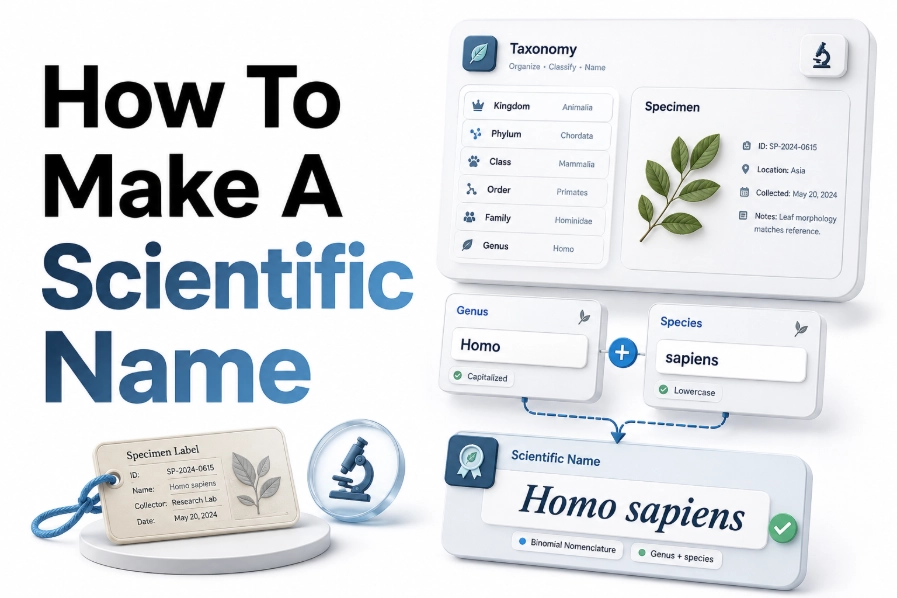
Scientific names give every organism a formal identity that can be used across languages, countries, and research fields. They reduce confusion caused by local names, regional spelling, and casual descriptions that may refer to several different species.
A proper scientific name usually follows binomial nomenclature, which uses two parts. The first part is the genus, and the second part is the specific epithet. Together, they create a unique name for one recognized species.
This system matters because science depends on precision. A plant, animal, fungus, bacterium, or fossil must be named in a way that other researchers can trace, compare, cite, and apply consistently in future studies.
The Basic Structure of a Scientific Name
A scientific name has two main words. The genus name comes first and always begins with a capital letter. The specific epithet comes second and is written in lowercase, even when it refers to a person or place.
For example, Homo sapiens includes Homo as the genus and sapiens as the specific epithet. The two words are usually italicized in published writing. When italics are unavailable, each word may be underlined instead.
The name should read as a Latin or Latinized phrase. It does not need to come from classical Latin, but it should follow accepted naming style so the final result fits scientific literature and taxonomic databases.
Scientific Name Quick Rules
- Use two words for a species name.
- Capitalize the genus name only.
- Keep the specific epithet lowercase.
- Italicize the full scientific name in formal writing.
- Avoid names already used for another species in the same genus.
- Follow the naming code for the organism group.
- Base the name on a clear feature, location, person, or concept.
Choosing the Genus Name
The genus name places the organism within a broader group of closely related species. If the organism belongs to an existing genus, you should use that genus rather than creating a new one without strong taxonomic evidence.
A new genus name is only suitable when the organism does not fit well into current genera. That decision usually requires detailed comparison of anatomy, genetics, evolutionary history, and published taxonomic work from related groups.
The genus name should be concise, pronounceable, and distinctive. It may reflect a feature, origin, historical reference, or honored person, but it should not be casual, promotional, offensive, or likely to cause confusion.
Creating the Specific Epithet
The specific epithet is the second part of the species name. It helps distinguish one species from others in the same genus. It often refers to a visible trait, habitat, geographic origin, behavior, or the person being honored.
If a species has red leaves, a name based on color may be appropriate. If it lives in a mountain region, the epithet may reflect that place. The name should connect meaningfully to the organism.
A good epithet is short, stable, and relevant. It should avoid vague praise, jokes that may age poorly, or wording that gives no useful taxonomic signal. Scientific names often last for centuries, so restraint matters.
Common Sources for Species Epithets
Descriptive traits: Names may refer to shape, color, size, pattern, texture, or a distinctive body part.
Geographic origin: Names may reflect a country, island, river, mountain, forest, cave, or region.
Habitat: Names may refer to soil, water, climate, host species, elevation, or ecological niche.
People: Names may honor a collector, researcher, community member, or historical figure.
Behavior: Names may describe feeding style, movement, sound, breeding pattern, or seasonal activity.
Using Latin and Latinized Words
Scientific names are treated as Latin, even when the root word comes from Greek, a modern language, or a personal name. This allows names from many languages to fit one shared naming system.
You do not need to be fluent in Latin to create a name, but you should use standard endings and grammar carefully. Many naming errors come from mixing word forms without checking gender, case, and agreement.
For simple naming, use established taxonomic examples as models. If the genus is masculine, feminine, or neuter, descriptive adjectives often need matching endings. Nouns used in apposition may not change in the same way.
Matching Gender and Grammar
Many genus names have a grammatical gender. When the specific epithet is an adjective, it usually must agree with that gender. This means the ending may change depending on whether the genus is masculine, feminine, or neuter.
For example, an adjective meaning “white” may appear differently across names. The correct ending depends on the genus. This detail may seem small, but it affects whether the name meets formal taxonomic standards.
If the epithet is a noun, a place name, or a dedication, the grammar may follow different rules. Before finalizing the name, compare similar published names and consult the relevant nomenclature code for that organism group.
Checking Whether the Name Already Exists
Before using a scientific name, check whether it has already been published. A name that looks original may already exist in an old journal, museum record, fossil catalog, herbarium sheet, or taxonomic database.
Duplicate names can cause serious problems. In many cases, the earliest validly published name has priority. Later names may become synonyms or need replacement, which creates extra work for researchers and databases.
Use recognized sources such as taxonomic catalogs, biodiversity databases, journal archives, and specialist monographs. For a broader naming workflow, your species identification basics guide can support the comparison process before a name is proposed.
Main Databases to Check
Catalogue of Life: Useful for many accepted species names across major organism groups.
GBIF: Helpful for occurrence records, synonyms, and distribution data.
ZooBank: Important for animal nomenclature and registered zoological names.
IPNI: Useful for plant names, author abbreviations, and publication records.
MycoBank: Commonly used for fungi and related taxonomic records.
NCBI Taxonomy: Useful for names connected to genetic sequence records.
Following the Right Naming Code
Different organism groups follow different nomenclature codes. Animals, plants, algae, fungi, bacteria, and cultivated plants each have their own rules. The correct code depends on the organism you are naming.
Animal names follow the International Code of Zoological Nomenclature. Plants, algae, and fungi follow the International Code of Nomenclature for algae, fungi, and plants. Bacteria follow the International Code of Nomenclature of Prokaryotes.
These codes cover publication rules, priority, spelling, authorship, type specimens, and valid naming. A name may sound correct but still fail if it does not meet the rules for its biological group.
Working With Type Specimens
A scientific name must usually be linked to a type specimen, type culture, or similar reference material. This serves as the permanent anchor for the name and helps future researchers verify what the name means.
For animals and plants, the type specimen is often preserved in a museum, herbarium, or research collection. For bacteria, a type strain may be deposited in recognized culture collections so other scientists can study it.
The type material should be documented carefully. Collection date, location, collector, habitat, measurements, images, and preservation details all help support the name. Strong type documentation protects the name from later confusion.
Writing a Name Description
A new scientific name should be supported by a formal description or diagnosis. This text explains how the organism differs from related species and why it deserves recognition as a separate taxon.
A strong description includes measurable traits, comparison with similar species, and references to previous work. For many modern studies, DNA evidence, images, maps, and ecological notes also add useful support.
The description should focus on evidence rather than style. Clear technical writing matters more than dramatic language. Readers should be able to see exactly what separates the organism from its closest known relatives.
Formatting the Name in Writing
The full scientific name should be italicized when typed or printed. The genus begins with a capital letter, while the specific epithet stays lowercase. After first use, the genus may sometimes be abbreviated.
For example, Panthera leo may later appear as P. leo when the context is clear. Avoid abbreviation if several genera share the same initial, because readers may misread the name.
The author name and publication year may follow the scientific name in taxonomic writing. Formatting depends on the organism group and code. In general blog content, the binomial name alone is often enough.
Avoiding Common Naming Mistakes
One common mistake is treating the specific epithet like a standalone species name. It is not complete without the genus. The epithet only identifies a species when paired with the correct genus.
Another mistake is choosing a name based on weak evidence. A new name should not be created just because an organism looks slightly different. Variation, age, sex, season, and environment can all affect appearance.
Spelling mistakes also create lasting issues. Once a name is published, correction may be limited by nomenclature rules. Check grammar, database records, and manuscript formatting before submitting a name for publication.
Ethical Naming Practices
Scientific names can honor people, places, cultures, and communities, so naming carries responsibility. A name should be respectful, accurate, and suitable for long-term use in research, conservation, education, and public records.
Avoid names that commercialize the organism or reduce it to a joke. Humor may attract attention briefly, but scientific names are permanent tools. A careless name can become a burden for future researchers.
When naming after Indigenous places, local communities, or culturally significant terms, consultation matters. Ethical naming should respect language, consent, and context. For related writing support, see our taxonomy writing guide for science content.
Practical Example of Name Creation
Imagine a newly identified plant in the genus Salvia. It has narrow silver leaves and grows only on limestone cliffs in a specific valley. The genus is already known, so only the epithet needs creation.
A descriptive epithet could refer to the silver leaves. A geographic epithet could refer to the valley. A habitat-based epithet could refer to limestone cliffs. Each option should be checked for grammar and prior use.
The best choice depends on what feature is most stable and useful. If silver leaves clearly separate the plant from related species, a descriptive name may help future botanists recognize it more easily.
Publication and Registration
A scientific name becomes useful only when it is properly published according to the relevant code. Private notes, classroom examples, website drafts, and informal reports usually do not create valid scientific names.
Publication often requires a peer-reviewed article, formal diagnosis, type information, repository details, and clear naming statement. Some groups also require or strongly encourage registration in recognized databases before or during publication.
After publication, databases may index the name and connect it to specimens, literature, and sequence data. This step helps the name enter scientific use and makes it easier for others to cite correctly.
Short Workflow for Making a Scientific Name
Step 1: Confirm that the organism is likely a distinct species.
Step 2: Identify the correct genus through comparison and evidence.
Step 3: Choose a meaningful specific epithet based on a trait, place, habitat, or person.
Step 4: Check grammar, gender agreement, and Latinized form.
Step 5: Search taxonomic databases for earlier uses.
Step 6: Prepare type specimen or type strain details.
Step 7: Write a formal description and comparison.
Step 8: Publish the name under the correct nomenclature code.
Conclusion
Creating a scientific name is a careful process that blends taxonomy, grammar, evidence, and publication rules. The name must fit the organism, follow the correct code, and remain clear for researchers who may use it decades later.
The best names are simple, meaningful, and supported by strong documentation. They connect an organism to its classification while giving future readers a stable reference point for research, conservation, and education.
If you want to know how to make a scientific name, start with the organism’s genus, choose a relevant epithet, check Latin form and existing records, then publish the name with proper type material and evidence.
FAQ
What is the basic scientific name format
A scientific name usually has two words: the genus and the specific epithet. The genus is capitalized, the epithet is lowercase, and both are italicized in formal writing. This format is called binomial nomenclature.
Can anyone create a scientific name
Anyone can suggest a name, but a valid scientific name must follow formal nomenclature rules. It usually needs proper evidence, type material, a written description, and publication through an accepted scientific channel.
Does a scientific name have to be Latin
A scientific name is treated as Latin, but the root word may come from many languages. The final form should be Latinized and follow accepted grammar, spelling, and naming conventions for the organism group.
Why are scientific names italicized
Scientific names are italicized to separate them from surrounding text and show that they follow formal taxonomic convention. If italics are not available, the genus and specific epithet may be underlined instead.
Can a species be renamed later
A species name can change if classification changes, an older valid name is found, or the original name breaks nomenclature rules. Taxonomists follow priority and code-based procedures when deciding which name should be used.
0 Comments